ServicesSolar Repair
Solar Repair in McKinney
When your system stops producing what it should, we find the specific part that failed and why. That might be an inverter, a connector or a cracked module. We repair it, show you what we found, and check your production numbers afterward to make sure the fix holds.
Finding the Cause, Not Just the Symptom
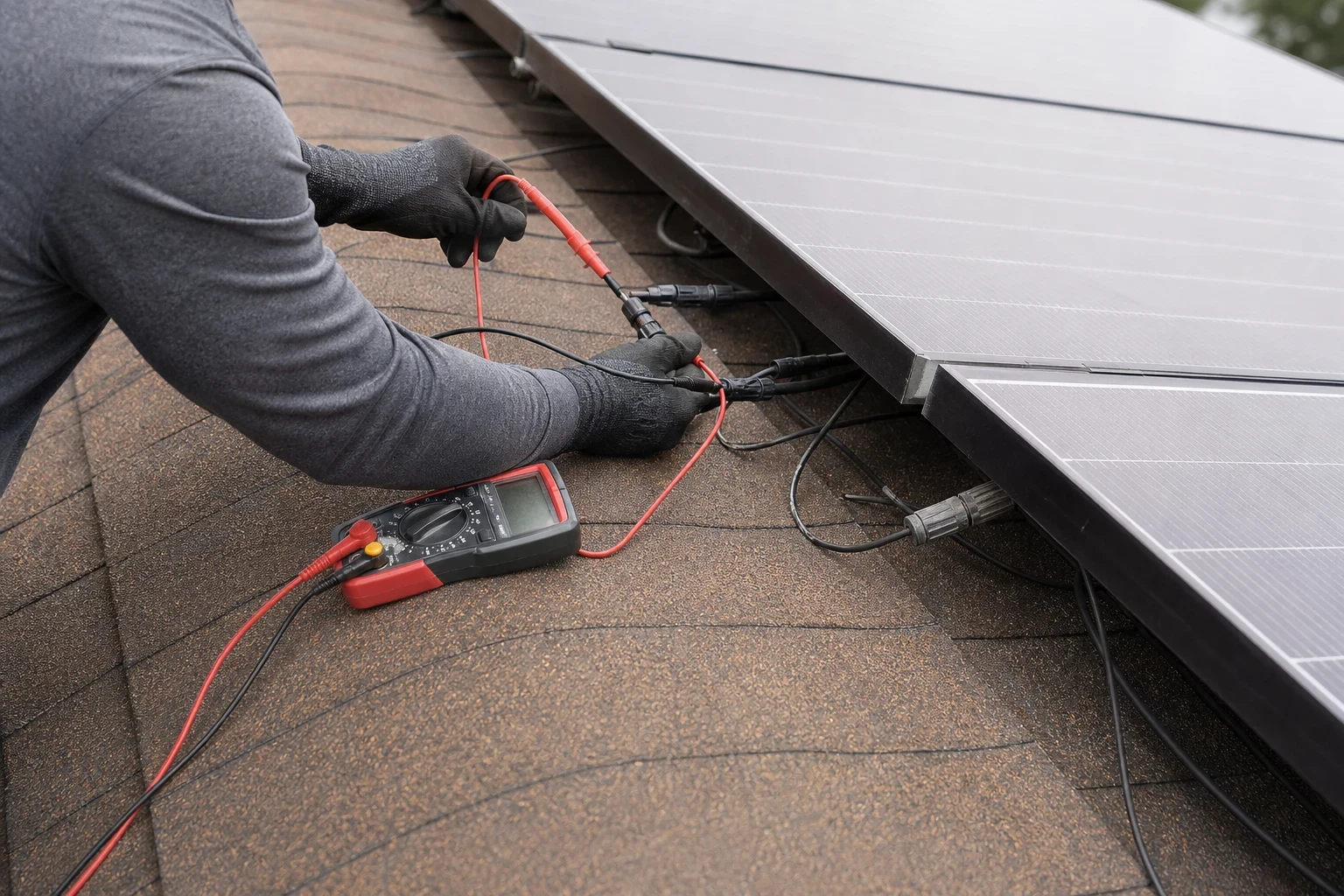
A solar array is a chain of parts: modules, MC4 connectors, string wiring, optimizers or microinverters, the inverter, the rapid shutdown device and the monitoring gateway. A drop in output tells you something in that chain is wrong. It doesn't tell you which link. We test each part with a meter and a thermal camera before we replace anything, so you pay to fix the part that actually failed.
Some problems are slow. A loose connector heats up, browns and then opens over months of summer heat cycling. Others are sudden, like a hailstone that cracks the glass on two modules in one afternoon. Either way, we explain the cause in plain terms and tell you honestly whether a part should be repaired or replaced.
We have been in business 5 years, and our solar work carries a 10-year workmanship warranty. After a repair we don't just leave. We check back on your system's output so you know the fix did its job.
What Our Solar Repair Covers
- 01
Inverter diagnosis and replacement
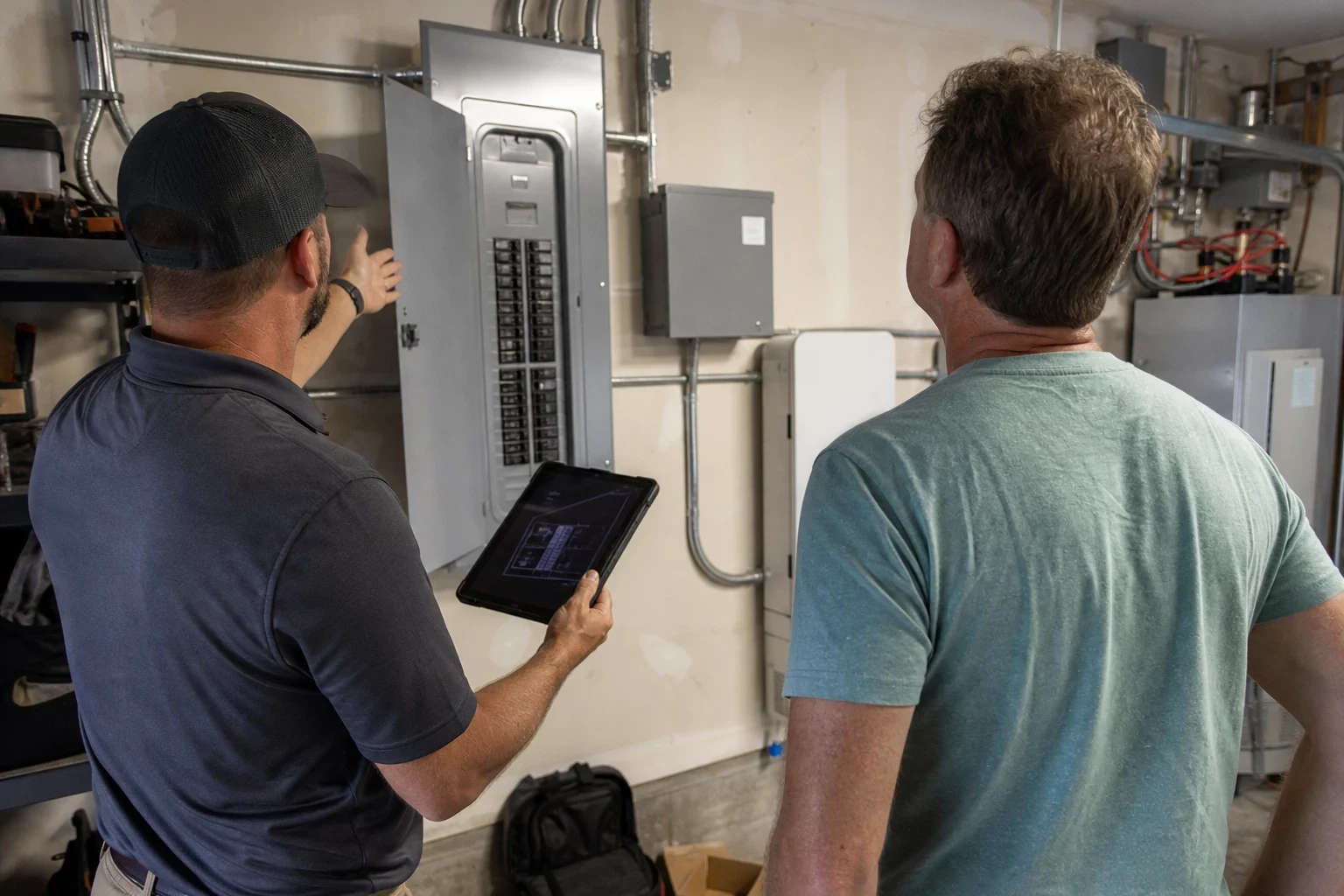
We read the inverter's fault codes, test DC input voltage and check AC output against the utility side. If the unit has failed, we replace it and recommission it so it reports correctly again.
- 02
Microinverter and optimizer swaps
A single failed microinverter or optimizer drops one panel out of production. We pinpoint which one from the monitoring layout, pull the module, swap the unit and confirm it comes back online.
- 03
Wiring and connector repair
Chewed conductors, cracked conduit and corroded or mismatched MC4 connectors cause ground faults and arc faults. We cut back to clean wire, install matched connectors and secure the runs off the roof surface.
- 04
Damaged module replacement
Cracked glass, delamination and hot spots from failed bypass diodes all reduce output and can worsen over time. We match a replacement module to your string's electrical specs so it doesn't drag down the rest.
- 05
Monitoring reconnection
Often the panels are fine and the gateway lost its Wi-Fi or its communication card failed. We restore the connection so you can see your production again.
- 06
Mount and flashing reseal
If water is getting in at a solar mount, we reseal or reflash that penetration. If the roof itself needs work beyond the mounts, we tell you so you can bring in a roofer.
Questions about Solar Repair?
Call(972) 737-7943Signs Your Solar System Needs Repair
Production dropped without a reason
Compare this month to the same month last year. A drop of more than a few percent on clear days points to a failed component, not the weather.
Fault light or error code on the inverter
A red or amber light, or a code like ground fault or arc fault, means the inverter has shut down or limited itself for safety. It won't clear itself for good until the cause is fixed.
Monitoring shows zero or a missing panel
A blank tile in a panel-level layout usually means one microinverter or optimizer has failed. A whole-system zero can be the inverter, a tripped breaker or just a lost connection.
Visible damage after a storm
North Texas hail can crack module glass that still looks intact from the ground. If a storm came through and output changed, have the array checked.
Wires hanging below the panels
Loose or chewed wiring under the array is often from squirrels or birds nesting in the shade gap. Exposed conductors are a fire and shock risk.
How a Repair Visit Runs
- 1
Phone review of your data
When you call, we ask about your system's make, age and what your monitoring shows. That lets us bring the likely parts and plan the testing before we arrive.
- 2
On-site testing
We check the inverter's logs, measure string voltage and current, and scan the array with a thermal camera to find hot connectors or cells. You get photos of what we found.
- 3
Written repair plan
Before we start, we explain the cause, the fix and the cost in writing. If replacing a part makes more sense than repairing it, we say so and explain why.
- 4
Repair and recommissioning
We shut the system down safely through rapid shutdown, make the repair, then bring it back up and confirm every string and panel reports production.
- 5
Follow-up on output
A few weeks later we check back on your production numbers to make sure the repair held, and we walk you through what to watch for in your monitoring app.
What Affects the Cost of a Solar Repair
The price of a repair comes down to the part that broke and the labor needed to get at it. We test before we quote, so the number is based on a confirmed cause rather than a guess. You see the full cost in writing before any work begins.
- The failed component
- A reconnected monitoring gateway is a small job. A central string inverter replacement is the largest single part on most systems.
- Roof access and module location
- Reaching a microinverter in the middle of an array means removing modules around it. Steep pitches and second-story roofs add setup time and safety equipment.
- Part availability
- Older systems may use discontinued inverters or modules. Finding a compatible match, or an adapter-based replacement, can change both the parts cost and the schedule.
- Manufacturer warranty coverage
- Many inverters and modules carry their own manufacturer warranties. We check your serial numbers and help you file the claim, which can cut the parts portion of the bill.
Solar Repair Questions
Can you repair a system another company installed?
Yes. Most residential equipment uses the same connectors and testing methods regardless of who installed it. We'll ask for the make and model of your inverter and modules when you call so we come prepared.
Is my homeowners insurance going to cover hail damage to my panels?
Many policies cover panels as part of the dwelling, but terms vary. We document the damage with photos and test results you can give your adjuster. The coverage decision is between you and your insurer.
Why does my inverter keep showing a ground fault?
A ground fault means current is leaking to ground somewhere on the DC side, often through a nicked or sun-cracked wire jacket or water inside a connector or junction box. Resetting the inverter only clears it until the leak shows up again, so we track down the specific spot and fix it.
Will a repair affect my workmanship warranty?
Our solar work, including repairs, comes with a 10-year workmanship warranty. We'll tell you up front how that applies to the parts and labor on your specific job.
Why do you check back after the repair?
Some faults, like intermittent arc faults or a weak connector, only show up under certain heat or load. Checking your production a few weeks later confirms the fix held through real conditions. We're BBB Accredited with an A+ rating, and following up is part of how we work.
Get Your System Producing Again
Tell us what your inverter or monitoring app is showing, and we'll plan the right testing for your visit. We serve McKinney, Allen, Frisco, Prosper and the surrounding area.