ServicesBattery Storage
Battery Storage in McKinney
We add home battery storage to new and existing solar systems, sized from your actual loads rather than a brochure. You get backup power for the circuits that matter, solar energy saved for evening use, and a follow-up visit to confirm the system is charging and switching the way it should.
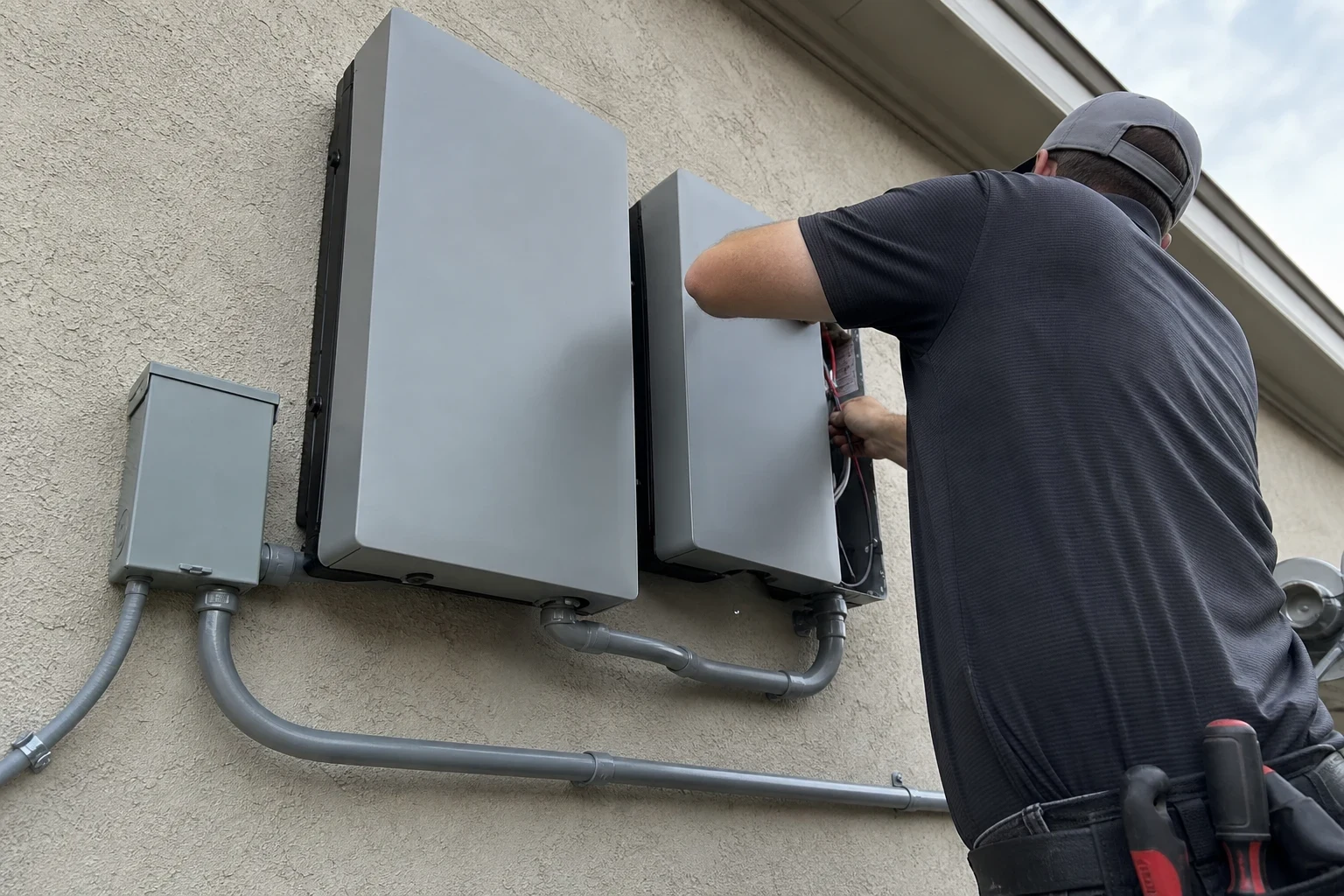
How stored solar power keeps your home running
Your panels produce the most around midday, often more than your home is using at that hour. A battery holds that surplus so you can draw on it after sunset or when the grid goes down. During an outage, a gateway or transfer switch disconnects your home from the utility in a fraction of a second, and the battery inverter carries the circuits you picked. Without that disconnect, a grid-tied solar system shuts itself off when the utility drops, by design, even under full sun.
Storage earns its place if outages hit you hard, if your retail plan credits exported solar at a low rate, or if someone in your home relies on powered medical equipment. If none of those fit, we will tell you. We have been in business 5 years and are BBB Accredited with an A+ rating, and we would rather give you a plain answer than sell hardware you will not use.
What our battery installation includes
Load study from your panel
We list the circuits you want backed up and measure what they draw. Continuous output in kilowatts and surge capacity matter as much as stored kilowatt-hours, because a well pump or air conditioner compressor pulls a large spike at startup.
AC- or DC-coupled design
Existing systems usually get an AC-coupled battery with its own inverter, which leaves your current panels and inverter untouched. New systems can be DC-coupled through a hybrid inverter, which avoids one conversion step and loses less energy.
Backup subpanel or whole-house gateway
If only some circuits need to stay on in an outage, we relocate those breakers to a separate subpanel fed by the battery. Covering the entire house takes a gateway mounted where utility power enters, and that bigger load list calls for more stored capacity.
Code-compliant placement
Lithium iron phosphate units go on an exterior wall or in the garage with the clearances and capacity limits the residential fire code sets. We keep them out of direct afternoon sun where we can, since heat shortens cell life and makes the battery throttle its output.
Permitting and utility filings
The electrical permit is our job, along with booking the city inspector. We also update your interconnection agreement with the utility so the battery is approved before it goes into service.
Signs a battery belongs on your list
Outages that cost you
Long outages, like the one during the February 2021 winter storm, spoil food, freeze pipes and shut down sump or well pumps. A battery keeps those loads running without a fuel supply.
Low pay for exported solar
Many retail plans credit exported power at well under what you pay to buy it. Storing midday production and using it in the evening keeps more of that value at home.
Medical equipment at home
Oxygen concentrators, CPAP machines and refrigerated medication need power that does not wait for the grid to come back.
A generator you would like to retire
Batteries run silently, need no fuel stored in the garage, and do not need an oil change before storm season.
Solar going in soon
Planning the battery with the panels lets us choose a hybrid inverter now. Adding storage later is still possible, but it often means a second inverter.
How a battery job runs
- 1
Site visit and load list
We look at your main panel, meter, existing inverter and the wall where the battery will hang. You tell us which circuits you cannot go without, and we check their draw.
- 2
Design and line-item pricing
We size the battery, choose the inverter, and send pricing broken out by part: capacity, inverter, gateway or subpanel, and labor. Alongside it, we estimate how many hours your chosen loads should run on stored power.
- 3
Installation day
Most installs take one to two days. Tying into the main panel means shutting off your service for a few hours, and we set that window with you ahead of time so nothing catches you off guard.
- 4
Inspection and commissioning
After the city inspection passes, we set the operating mode, run a simulated outage with you watching, and walk you through the monitoring app.
- 5
Follow-up check
We come back after the system has run through a few weeks of charge cycles to review the data, confirm firmware is current and answer what came up in daily use. We also cover how to read the state of charge and when to change the backup reserve setting ahead of storm season.
Where battery storage costs come from
Two things drive most of the number: the stored energy and output your loads require, and the condition of the electrical equipment already on your home. We work from your load list and a look at your panel, then break the estimate out line by line so the total holds up once work starts.
- Capacity and output
- More kilowatt-hours mean longer runtime, and higher continuous kilowatts let you run bigger loads at once. Stacking a second battery module raises both.
- Partial versus whole-home backup
- A dedicated backup subpanel costs less than a gateway sized for the whole service, but it limits what runs during an outage.
- Existing equipment
- An older main panel with no room for new breakers, or a meter base that needs work, adds labor and parts. AC coupling to an existing inverter also adds a battery inverter.
- Placement and wiring distance
- Long conduit runs between the battery, inverter and main panel add wire and labor, especially when the route crosses finished garage walls.
Battery storage questions
Something not covered here? (972) 737-7943
Will a battery work with the solar panels already on my roof?
In most cases it will. An AC-coupled battery ties in on the AC side, and your current inverter stays where it is. Before recommending anything, we confirm your inverter model and check whether the main panel has room for the new breakers.
How long will a battery run my home during an outage?
That depends on what is running. A single battery covering the refrigerator, lights, internet and a few outlets can last through the night, while a central air conditioner can drain it in a few hours. With sun the next day, your panels recharge it while still powering your home.
Where will the battery go?
Usually on an exterior wall near the main panel or inside the garage. Fire code limits how much capacity can sit in one spot and requires clearance from doors and windows, so we plan placement around those rules and shade.
What warranty comes with the work?
We provide a 10-year workmanship warranty on solar. The battery and inverter hardware carry their own manufacturer warranties, and we go over those terms with you before you decide.
Does a battery need maintenance?
Very little. Keep the vents clear, avoid stacking boxes against the unit, and let firmware updates install. At our follow-up visit we show you which alerts in the app matter and which you can ignore.
Find out what a battery would cover in your home
Tell us which circuits you want to keep running, and we will explain capacity, placement and what the job involves. If you are also weighing solar panel installation, we can plan both together.