ServicesRoof-Mounted Solar
Roof-Mounted Solar in McKinney
We put solar arrays on your roof the way they should sit for decades: mounts lagged into rafters, every penetration flashed, wiring kept tidy. Once the system is running, we come back to check it and show you how to care for it.
What roof-mounted solar is and when it fits
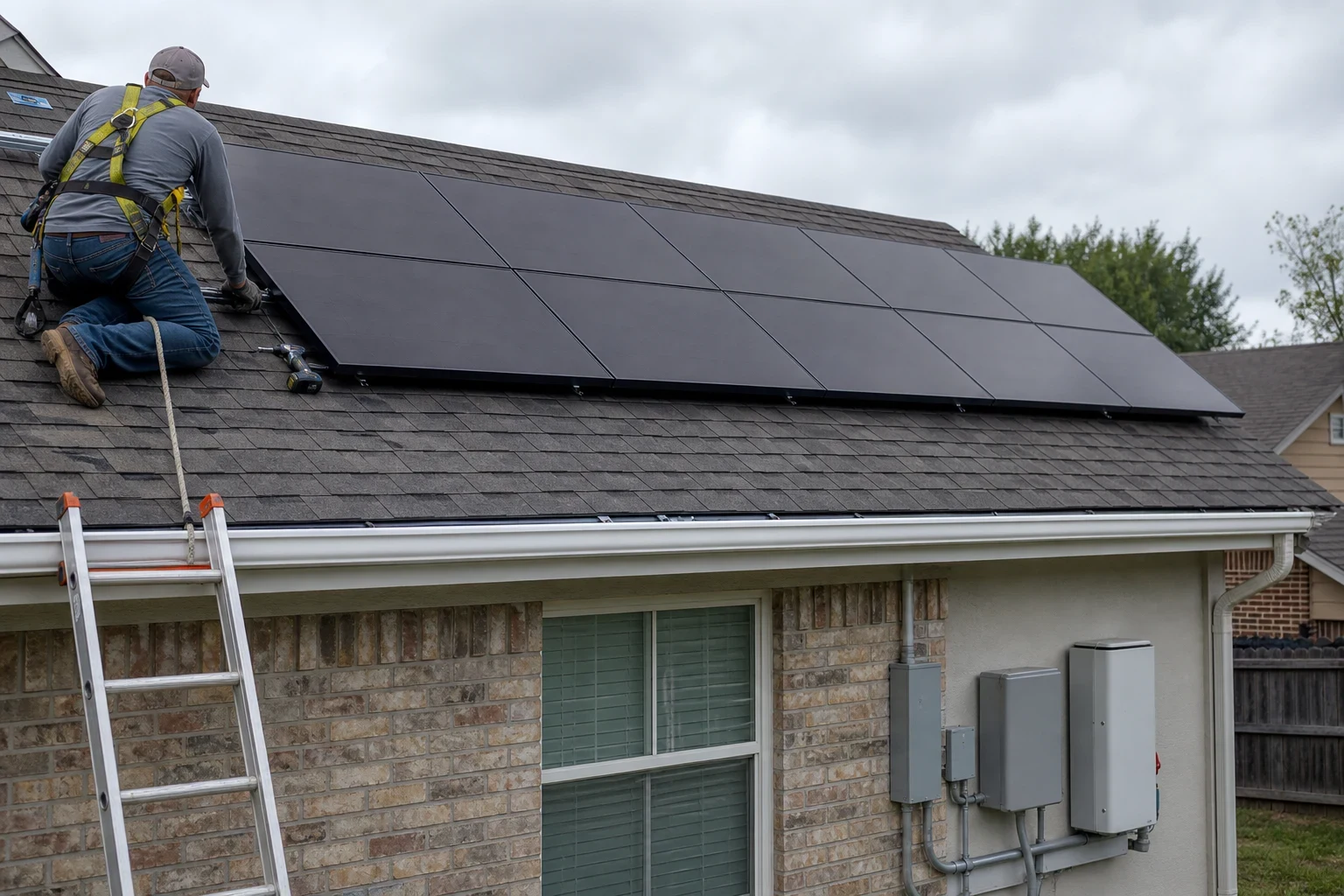
A roof-mounted system uses the roof you already have as the structure. Aluminum rails attach to mounts that are lag-bolted into the rafters, and the panels clamp to those rails a few inches above the shingles. That gap matters. Air moving under the modules keeps them cooler, and cooler panels produce more power on a hot afternoon.
Good candidates usually share two traits: at least one roof face pointing toward the south, west or east that stays mostly clear of shade through the day, and a roof covering with plenty of service left. Most composition shingle roofs around McKinney qualify. If your shingles are close to worn out, have that work done before the array goes up, since pulling and resetting panels later adds cost.
We have been in business 5 years, and the step many installers drop is one we keep: once your system has been producing for a while, we return, go over the numbers with you and explain what care it needs.
What the work includes
Roof and structure check
We measure each roof plane, note the pitch and azimuth, and look in the attic to confirm rafter size and spacing. That tells us where mounts can land and whether the framing carries the added load.
Flashed mounts into rafters
Each mount is located on a rafter, not just the decking, and sealed with a flashing plate that slides under the shingle course above it. Water sheds over the flashing instead of relying on sealant alone.
Rails, clamps and grounding
Panels sit on aluminum rails with mid and end clamps sized for the module frame. Every rail and module frame is tied to a grounding path, so the whole array behaves as one electrically safe assembly.
Fire code setbacks
We leave the clear pathways along ridges and edges that fire code calls for, so firefighters can work on the roof if they ever need to. It shapes the layout, and we show you why before anything is final.
Wiring and conduit
Wire runs are clipped under the array, not left touching the shingles, and drop through a single sealed roof entry or run in conduit to the inverter and disconnect.
Permit, inspection and follow-up
We pull the permit, meet the inspector and handle the utility interconnection paperwork. Once the system is live, we return to confirm it is producing as designed.
Signs a roof array is the right fit for your home
High summer bills
If your largest bills land from June through September, that is when panels produce the most. A roof array lines up generation with your heaviest air conditioning use.
Open, unshaded roof planes
South and west faces without tall trees or a neighbor's second story nearby give the best output. East-facing planes still work well for many homes.
No room for ground mounts
Most suburban lots do not have yard space for a ground array. The roof is space you already own and are not using.
Shingles with years left
A roof covering with a good stretch of life ahead means the panels can stay put for a long time without being pulled and reset.
You want to add storage later
A roof array can be designed with battery storage in mind, so adding a battery down the road is simpler.
How the job runs
- 1
Site visit and design
We inspect the roof and attic, review your past electric bills and draw a layout that respects setbacks and shade. You get a written estimate with each part listed.
- 2
Permits and approvals
We prepare the plan set for the city's permit office and file the interconnection application with your utility. The roof stays untouched until both approvals come back.
- 3
Install day
Our crew snaps chalk lines, locates rafters, sets and flashes mounts, then installs rails, panels and wiring. Most homes take one to two days. Before the crew leaves, we sweep up shingle grit and haul off every box and pallet.
- 4
Inspection and turn-on
A city inspector reviews the mounts, wiring and labels. Your utility then swaps or reprograms the meter and grants permission to operate, and we walk you through the monitoring app the day it goes live.
- 5
Check-back visit
Once the system has run for a while, we come back to compare actual output with the design estimate, look over the mounts and wiring, and explain how to keep the array in shape.
What moves the price
Every roof is different, so we price only once we have been on it and in the attic. Your written estimate breaks out panels, inverters, racking and labor so you can see where the money goes. These are the factors that change the number most.
- System size
- The number of panels follows your usage and how much roof space is usable. More modules mean more racking and more labor.
- Roof pitch and layout
- Steep pitches and roofs broken into many small planes need more safety setup and more mounts, which adds crew time.
- Inverter type
- Microinverters mount behind each module and carry a higher price than one central inverter, yet they keep a shaded panel from dragging down the rest of the string. We lay out which one suits your roof.
- Electrical upgrades
- Some older main panels cannot accept solar backfeed without an upgrade or a supply-side connection. We check this on the first visit so it is in the estimate, not a surprise.
Roof-mounted solar questions
Something not covered here? (972) 737-7943
Will the mounts make my roof leak?
Each mount is lagged into a rafter and covered by a flashing plate tucked under the shingle above, so water flows over it rather than into the hole. Sealant is a backup, not the main defense. Our work is backed by a 10-year workmanship warranty on solar, which covers the mounts and penetrations we install.
How does the array hold up to hail?
Panels use tempered glass tested for hail impact, and they generally take a storm better than the shingles around them. Following a big storm, check the monitoring app for any drop in output and let us know if something looks off. We can inspect the array as part of our solar repair service.
What if my roof needs replacing later?
The panels and rails can be removed, stored and reinstalled with new flashing. It is a planned job that adds cost, which is why we look at roof age before design.
Do the panels need cleaning?
Rain handles most dust, but pollen and long dry spells can leave a film that cuts output. If your production numbers drop without a weather reason, our panel cleaning service uses soft brushes and purified water that will not scratch the glass.
Why should I trust your company with my roof?
The Better Business Bureau lists us as BBB Accredited, A+ rating. Just as important, we do not disappear once the inspector signs off. We return to your home to check the mounts and output and to explain how to care for the array.
Find out what your roof can produce
Give us a ring with a recent electric bill handy, and we will set a time to measure your roof planes, check the attic framing and sketch the array. You receive an itemized written estimate before any work is scheduled.