ServicesSolar Panel Installation
Solar Panel Installation in McKinney
We design and install rooftop solar sized to your home's actual electric use, pull the permits, handle utility interconnection, and come back after the system goes live to check production and show you how to care for it.
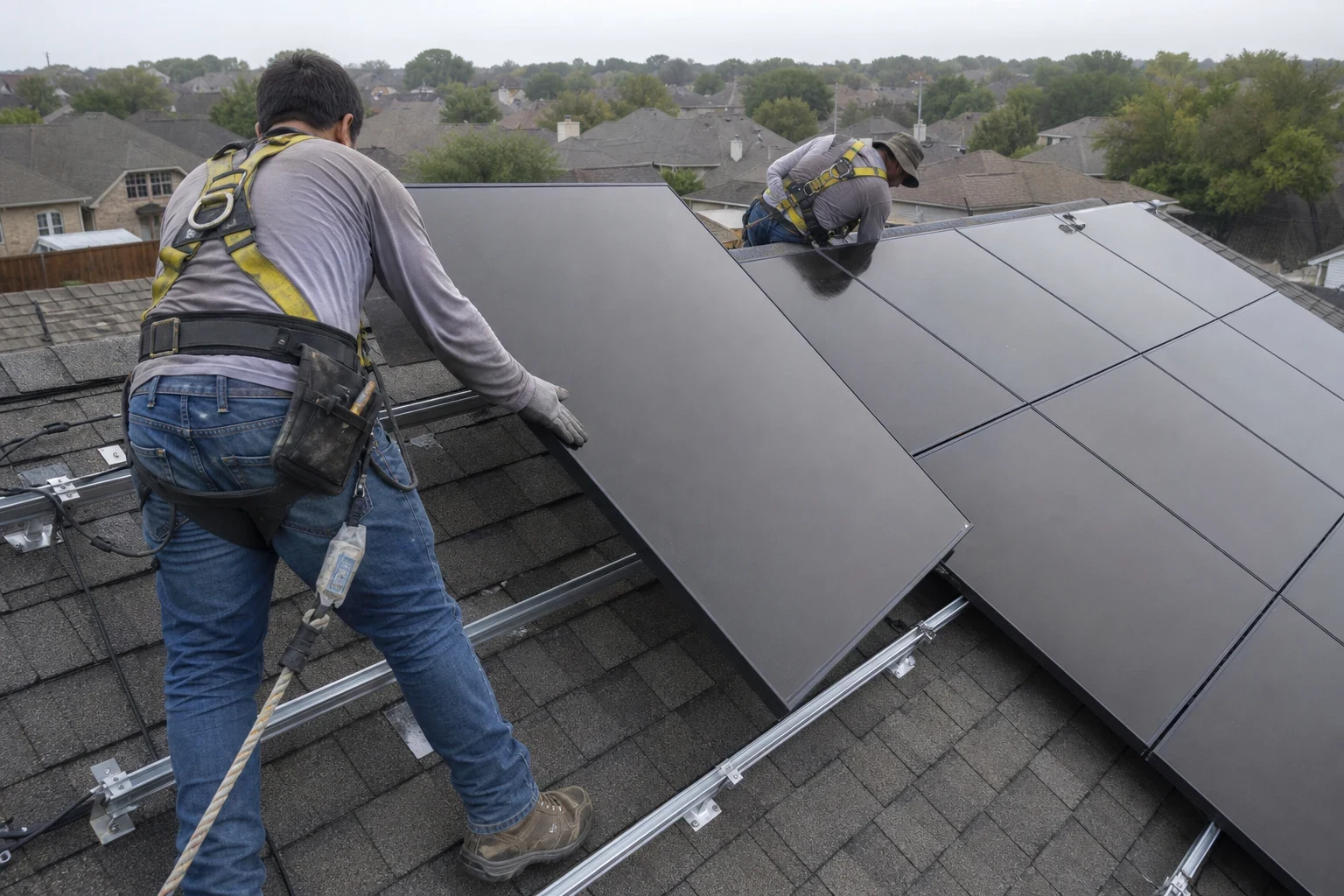
What a Solar Installation Covers
The panels are only the part you see. Under them sits racking lagged into your rafters. Behind them, DC conductors run to a string inverter or to microinverters, and from there the power feeds a breaker in your main electrical panel and a utility meter that records flow in both directions. If any one of those parts is specified wrong, the system underperforms or fails inspection.
Solar is the right call when your roof has good sun exposure, enough remaining life to outlast a 25-year panel, and an electrical panel that can accept the added breaker. We check all three before we draw a layout. Shingles with only a few seasons left are worth replacing before the array goes up, since pulling panels off and putting them back later means paying for that labor a second time.
We have been in business 5 years, and the part of the job we put the most care into is the part most installers skip: coming back after commissioning to confirm the numbers and walk you through upkeep.
What's Included in Your Install
Roof and electrical survey
We measure roof planes, note azimuth and pitch, map shading from trees and chimneys, and inspect rafter size and spacing. We also open your main panel to check its bus capacity and available breaker space.
System design and production estimate
We size the array from your last 12 months of usage, not a rule of thumb. You get a layout drawing, the panel and inverter models, and a modeled annual production figure in writing.
Permits and HOA paperwork
We prepare the electrical and structural drawings for the city permit. If you have an HOA, we put together the layout package for its architectural review, keeping in mind that Texas law limits how far an HOA can block solar.
Racking, panels and wiring
Flashed mounts go into rafters, not just decking, and every penetration is sealed. Conductors run in conduit, sized for voltage drop, with rapid shutdown equipment as the electrical code requires.
Inspection and interconnection
We meet the city inspector, then file the interconnection paperwork with your utility so the meter can be set for two-way flow. We do not switch the system on until approval arrives.
Follow-up visit
After your system has run for a few weeks, we come back, compare real output to the estimate, check the monitoring app, and explain what to watch for.
When Your Home Is a Good Fit for Solar
Cooling drives your electric bills
Air conditioning load in North Texas climbs in the same months an array produces the most. Because demand and output peak together, the system pays back faster.
A south or west roof face with little shade
South-facing planes produce the most over a year. West faces produce later in the afternoon, which lines up well with peak cooling demand.
A roof with plenty of life left
Shingles with 15 or more years remaining can carry an array through most of its service life without a mid-life removal.
You plan to stay put
Payback depends on years of production. The longer you live in your home, the more of that return you keep.
You want backup power later
Designing with a hybrid inverter now makes adding battery storage simpler down the road.
How the Install Runs
- 1
Phone consultation
You call, we ask about your bills, roof age and goals, and set a time for the site survey.
- 2
Survey and design review
We measure on site, then go over the layout, equipment and production estimate with you line by line before you commit to anything.
- 3
Permitting
We file the permit and prepare any HOA paperwork. This waiting period is usually the longest stretch of the project.
- 4
Install day
On a typical house roof, the crew needs a day or two on site. We set mounts and rails, hang panels, run conduit, and mount the inverter and disconnect. Before leaving, we clear the yard of packaging and wire clippings.
- 5
Inspection, activation and check-back
After the city inspection and utility approval, we commission the system and set up monitoring. A few weeks later we return to confirm output and answer your questions.
What Moves the Price of a Solar System
We build every quote from your roof and your usage, so two neighboring homes can price very differently. Each estimate is itemized line by line. The factors below account for most of the difference from one house to the next.
- System size
- The kilowatt size, set by how much of your usage you want to offset, is the largest single factor.
- Equipment choice
- A string inverter costs less up front. Microinverters or optimizers cost more but handle partial shade better and report panel-level data.
- Roof complexity
- Steep pitches, multiple small planes and tile roofing take more labor and different mounting hardware than a simple shingle roof.
- Electrical upgrades
- If your main panel's bus cannot carry the added solar breaker, a panel upgrade or line-side tap adds to the cost.
Solar Installation Questions
Something not covered here? (972) 737-7943
Will installing panels cause roof leaks?
Not when mounts are flashed and fastened into rafters. Each attachment gets a metal flashing that slides under the shingle course above it, plus sealant, so water sheds over the mount instead of into the hole. We check those attachments again on the follow-up visit.
How do the panels hold up to hail?
Modern panels use tempered glass and are tested against hail impact as part of their certification. Severe storms can still crack a panel, so we show you how to spot damage in your monitoring app and in a visual check from the ground. Your homeowner's insurance policy usually covers storm damage to the array, and it is worth confirming with your agent.
What warranty comes with the installation?
We provide a 10-year workmanship warranty on solar, which covers the quality of our install work. Panels and inverters carry their own separate manufacturer warranties, and we give you that paperwork at commissioning.
How do I know the system is producing what you said?
You get a monitoring app that reports daily and lifetime production. On our follow-up visit we compare those numbers to the written estimate, adjusting for weather, and explain any gap.
What upkeep do the panels need?
Very little. Rain clears most dust, though pollen and bird droppings can build up in dry stretches, and panel cleaning helps then. We walk you through what normal output looks like by season so a real problem stands out, and solar repair is a phone call away if something needs attention.
Start With a Look at Your Roof and Bills
We are BBB Accredited, A+ rating, and we stay in touch after the install. Give us a ring and we will go over your usage, your roof and what a system could produce for your home in McKinney or nearby towns like Allen and Prosper.